Hydrogen Sulfide Detection in Wastewater Treatment Plants
Hydrogen sulfide is one of the most common and potentially dangerous gas hazards encountered in wastewater treatment facilities. H₂S is produced naturally when organic material breaks down under low-oxygen or anaerobic conditions. In wastewater systems, those conditions can occur in collection systems, wet wells, sludge-handling areas, digesters, tanks, and other locations where wastewater or solids can remain stagnant. The challenge is that H₂S concentrations are not necessarily constant, making hydrogen sulfide detection in wastewater environments an essential task that cannot be ignored.
Changes in flow, temperature, wastewater composition, agitation, and process conditions can cause concentrations of H₂S to rise or release accumulated gas into the surrounding atmosphere. An area that normally has relatively low levels can experience significantly different conditions during maintenance, cleaning, or process disturbances.
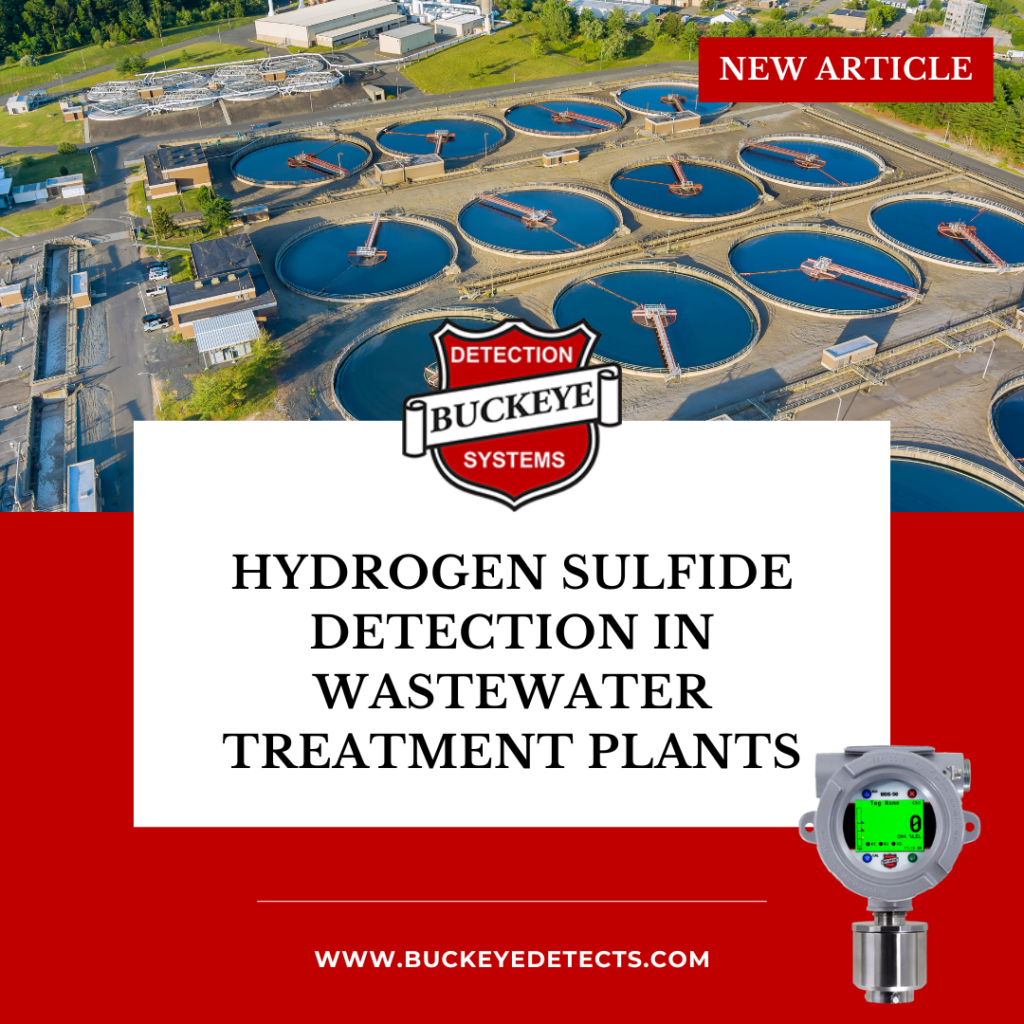
While H₂S is commonly associated with its distinctive “rotten egg” odor, smell should never be relied upon as a warning method. At elevated concentrations, hydrogen sulfide can quickly affect a person’s ability to detect its odor, making accurate and early detection with fixed gas detectors like the BDS-50 from Buckeye Detection Systems vital.
Beyond personnel exposure, H₂S presents another significant challenge for wastewater facilities: corrosion. In wastewater environments, hydrogen sulfide can contribute to the deterioration of concrete, metals, electrical equipment, and other infrastructure, creating both maintenance and operational concerns. This is why understanding where H₂S can develop, where it can accumulate, and how conditions can change is an important part of gas detection planning in wastewater treatment facilities.
Understanding the main areas where H₂S may concentrate in a facility allows gas detection equipment to be strategically located near these areas, allowing for the quickest detection time possible, alerting personnel to the high concentration, and allowing appropriate action to be taken. The BDS-50 provides continuous monitoring of H₂S and other hazardous gases in industrial and municipal applications, including wastewater facilities.
In wastewater environments, personal and portable gas detection equipment remain essential around areas where buildup can occur, such as collection systems, wet wells, sludge-handling areas, digesters, and tanks, but fixed gas detectors like the BDS-50 add an extra layer of protection for personnel, preventing overexposure and safeguarding both them and the facility.
To learn more about the BDS-50 and its high efficiency in wastewater detection applications, contact us on our website to speak with a member of our team.
To keep up with Buckeye, be sure to follow us on LinkedIn and our new social media profiles on Facebook, X, and Instagram!